
AI
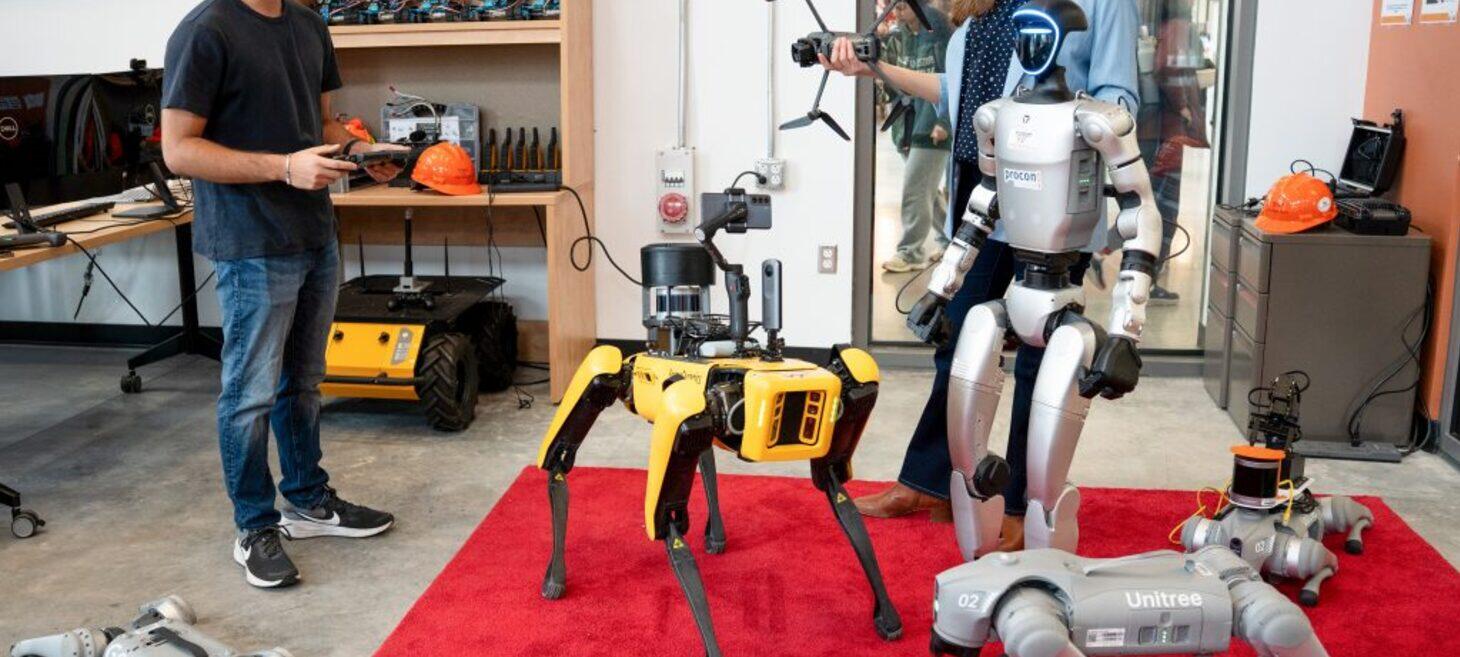
Robots and AI are tackling some of the biggest challenges in construction
A coordinated team of humanoid, quadruped, and aerial robots brings real-time transparency, improved safety, and scalable digital twin capabilities to one of the nation’s largest industries.
Robots and AI to help shipbuilding stay on track
American and Japanese researchers will develop robots and AI to help shipbuilders pivot when the built ship deviates from the planned design.

AI system learns to keep warehouse robot traffic running smoothly
This new approach adapts to decide which robots should get the right of way at every moment, avoiding congestion and increasing throughput.
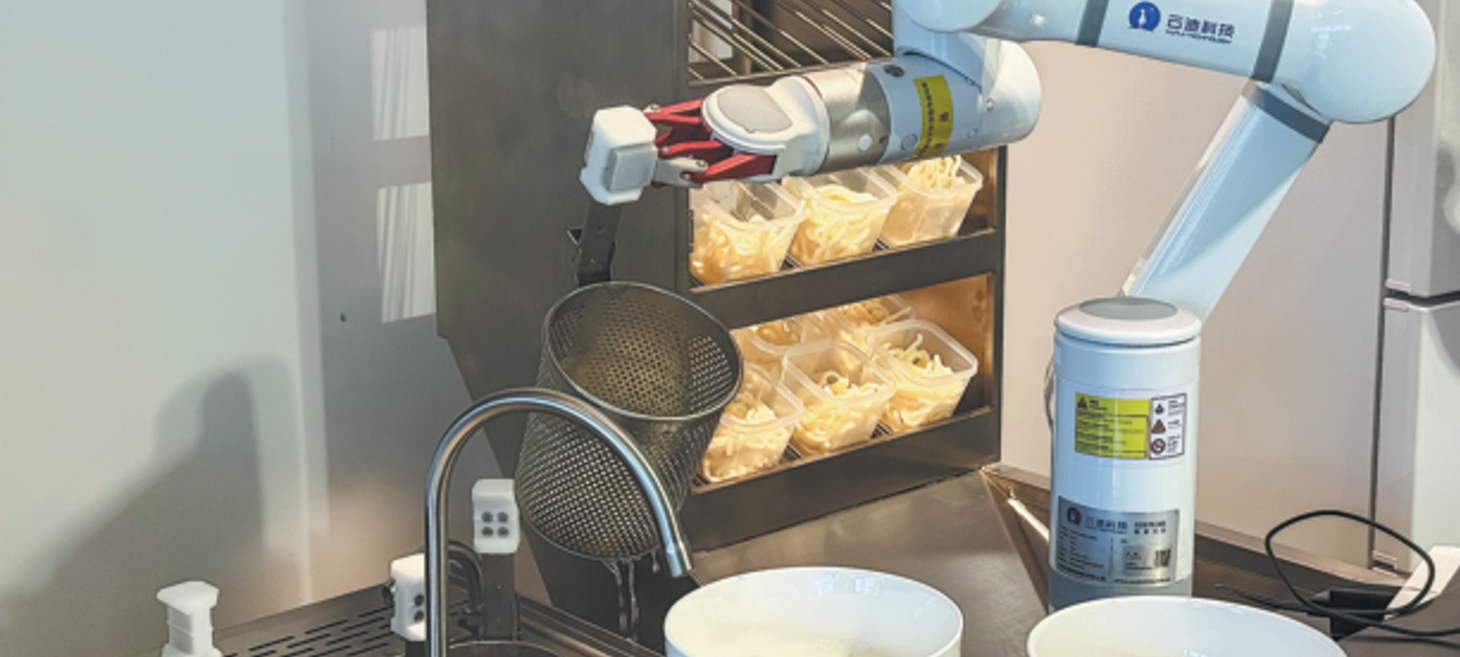
Hong Kong banking on AI, robotics acumen
With Hong Kong's abundant internationally connected services sector enterprises, research and development capabilities, and financial advantages, the special administrative region is becoming a testing ground for robotics companies seeking to take embodied artificial intelligence into overseas markets.
Caterpillar levels up robotics with FieldAI
At CES 2026, Caterpillar showed what can happen when a century of yellow-iron muscle plugs into the rapidly evolving world of artificial intelligence.
Taking the main stage alongside NVIDIA, the heavy equipment giant unveiled a vision in which Cat equipment is more than the brawn doing the heavy lifting at mines, construction sites, warehouses, and other industrial operations – it is part of a connected network of intelligent machines that can observe, analyze, and increasingly understand the world around them.
Innovation

TechCrunch Disrupt 2026’s new Real World AI Stage features Nvidia, robots, and extinct animals
At our past TechCrunch Disrupt events, AI has taken center stage, both throughout our programming and in a stage of its own. This year, the technology, implications, and players are so rapidly developing and widespread that we’re expanding the single AI stage into two!
The AI Stage will continue as you’d expect, with a rundown of sessions and speakers available for review right here. But the Real World AI Stage is brand-new for TechCrunch Disrupt 2026.

Japan Turns to Robots and AI to Keep Bears Away
While nature can be a source of relaxation and wellness, it can also be a source of danger. With bears becoming increasingly domestic, researchers are now looking for ways to keep these creatures at bay, and one team in Japan is turning to robots.
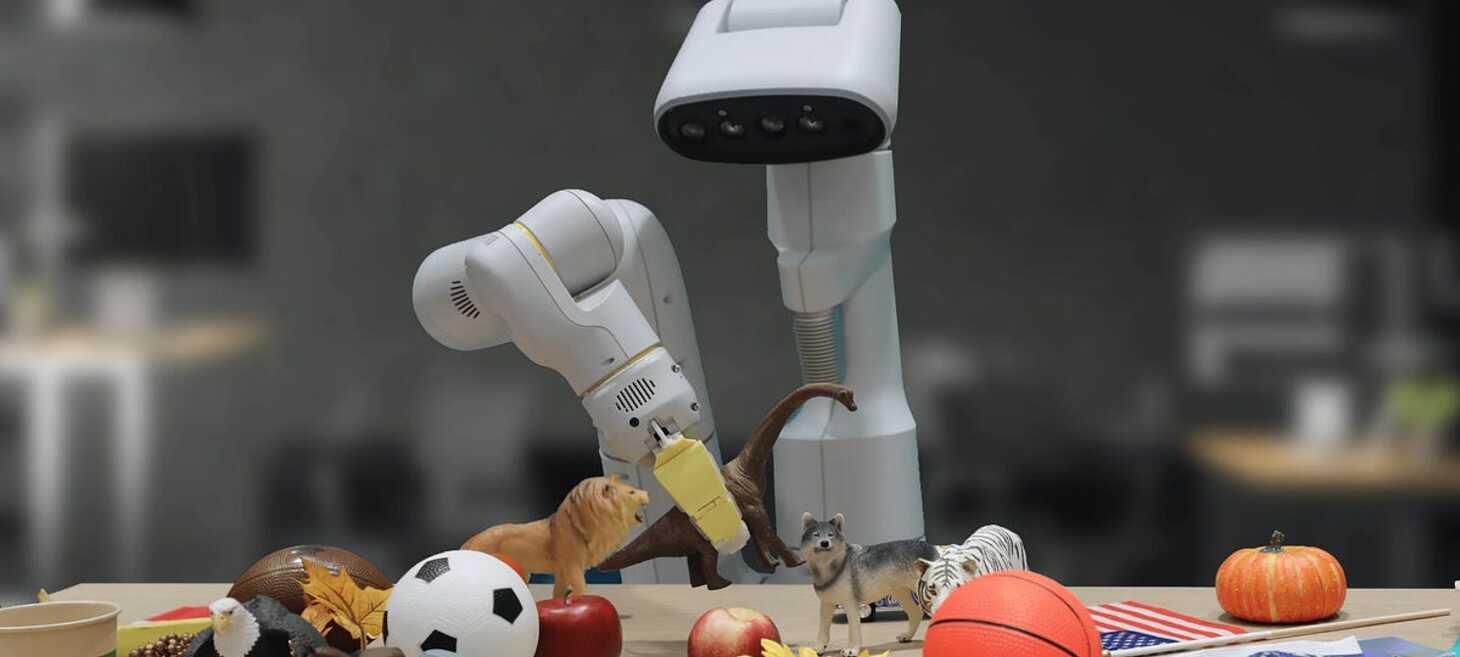
How Google taught LLMs to control robots and started a robotics boom
Most people first heard about large language models after OpenAI introduced ChatGPT in 2022. But in the minds of many AI researchers, the key breakthrough came two years earlier with the release of GPT-3.
With 175 billion parameters, the OpenAI model was more than 100 times larger than its predecessor, GPT-2. It was trained on a massive 300 billion tokens. And as a result, it generalized far better than previous models. For the first time, a single model could perform a wide variety of tasks — from translating between languages to answering trivia questions — without task-specific training.
Technology

NC AI, LG Electronics to Develop Humanoid Robot Technology
Consortium selected for K-On-Device AI semiconductor project to transfer human movements to robots

The Robot at the Front Desk: Trust, Risk, and Privacy
Hospitality, by its very nature, relies on the human touch, yet service robots have worked their way into hotels with promises of enhanced efficiency and novel guest experiences. The question is how far they can go. Professor Abraham Pizam and Dr. Ahmet Bulent Ozturk set out to explore how perceived risks and information security concerns influence guests' willingness to engage with robotic technology.
What they learned provides a roadmap for managing the transition to a more automated service environment.
Investment

Lyte, founded by Apple’s Face ID engineers, raises $165M at $1.6B to build robot perception
Robots keep getting smarter models. What they still mostly lack is a trustworthy way to see. That’s the vision behind Lyte’s $165 million Series C, which lands eight months after the company left stealth and instantly triples its valuation to $1.6 billion.
The $9 trillion opportunity in humanoid robotics
Humanoid robots represent one of the most significant technological opportunities of the coming decades. The industry is estimated to reach a total addressable market of approximately $9 trillion by 2050, driven by deployment across households, agriculture, manufacturing, logistics, and retail. While hardware revenue forms the foundation of this market, software and services could add an additional $3 trillion through app store ecosystems where users download capabilities ranging from caregiving to meal preparation.
Research
China’s logistics automation accelerates with advanced robots in postal hubs
China appears to be moving toward a logistics model that relies heavily on automation. Robots and software are increasingly taking on roles in sorting, loading, and dispatch tasks. Recent reports suggest that automated systems could play a bigger part in warehouses, postal centers, and fulfillment networks in the coming years.
LSU Researchers Advance Robotic Inspection Technology for Industrial Equipment
Researchers affiliated with LSU’s Center for Innovations in Structural Integrity Assurance (CISIA) are advancing a new robotic inspection technology designed to help industries inspect difficult-to-reach areas inside industrial equipment without costly disassembly.
Trends

Humanoid robots target smaller warehouse automation
Humanoid robots could extend warehouse automation into smaller and ageing facilities, as supply chain operators consider alternatives to large bespoke automation projects.
Battlefield

Thanks largely to robots, Ukraine is now talking about winning, not just surviving
Uncrewed and autonomous systems—and the willingness to adapt to them—have neutered Russian advantages.